

A school is holding a discussion for parents about when children should get their first smartphone. You have different views.
Prepare your arguments, then debate with your partner. Try to persuade them, but listen carefully and respond to their points. You do not have to express your real opinions.
Student A — In favour of smartphones
You believe that children should be allowed to have a smartphone from the age of eleven, with sensible rules. Starting secondary school is a good time to give them more independence.
Use these ideas to support your position:
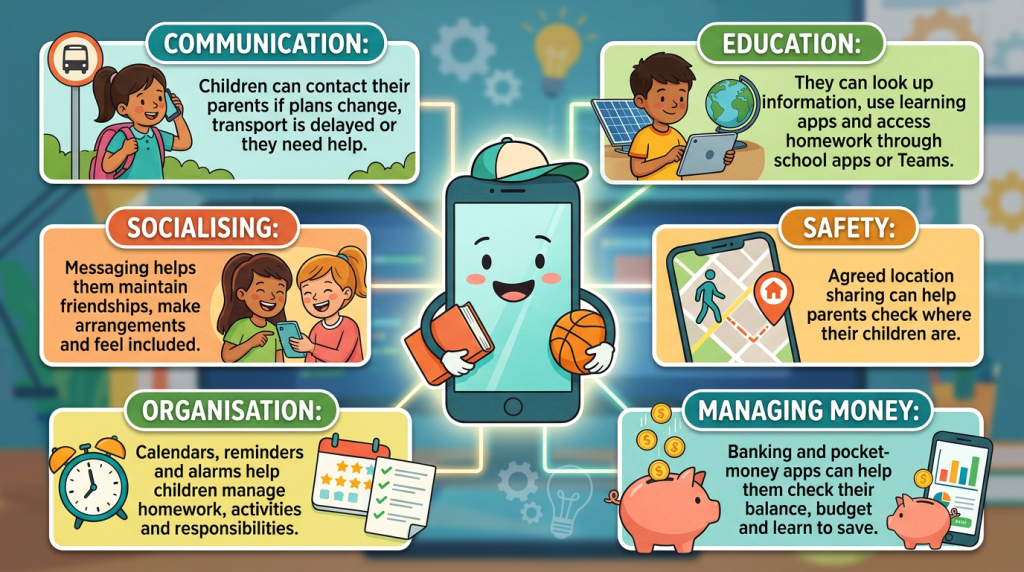
- Communication: Children can contact their parents if plans change, transport is delayed or they need help.
- Education: They can look up information, use learning apps and access homework through school apps or Teams.
- Socialising: Messaging helps them maintain friendships, make arrangements and feel included.
- Safety: Agreed location sharing can help parents check where their children are.
- Organisation: Calendars, reminders and alarms help children manage homework, activities and responsibilities.
- Managing money: Banking and pocket-money apps can help them check their balance, budget and learn to save.
Prepare a response to concerns about screen time and online safety. Think about rules or limits you would accept.
Language to use
- The good thing about having a smartphone at eleven is that …
- Surely being able to contact your parents is …
- Don’t you think children need to learn how to …?
- Wouldn’t it be better to teach them to …?
- So what you’re saying is that …?
- I understand your concern, but wouldn’t …?
Your starting point:
“The important thing is how children use their phones. With sensible rules, a smartphone can help them become more independent.”