The Common European Framework of Reference for Languages (CEFR) provides a shared system for describing language ability.
These levels are particularly useful for teachers and institutions working with large numbers of learners, as they offer a clear and consistent way to group students and design appropriate learning materials.
In practice, however, every learner is unique. A learner may speak more confidently than they write, understand more than they can produce, or perform differently depending on topic and context. CEFR levels should therefore be seen as practical reference points rather than fixed labels.
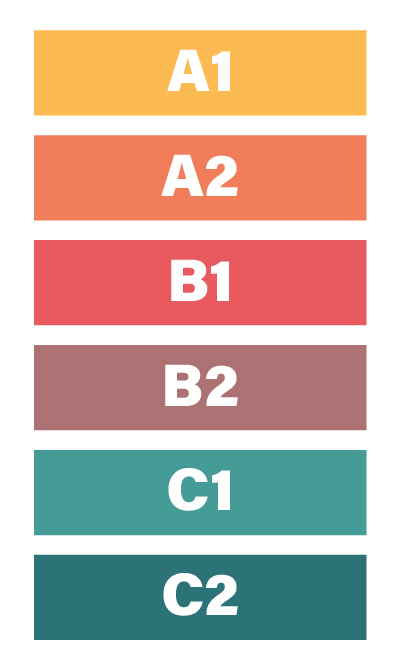
A1 – Beginner
Can produce very simple spoken English using familiar words and memorised phrases. Can introduce themselves, ask and answer basic personal questions, and communicate in a limited way with support and repetition.
A2 – Elementary
Can take part in short, simple conversations on familiar topics such as daily routines, work, or personal experiences. Can express basic opinions and needs, though speech may be slow and marked by pauses.
B1 – Intermediate
Can speak with reasonable fluency on everyday topics and personal interests. Can describe experiences, give reasons and explanations, and handle most situations likely to arise in daily life, despite occasional errors.
B2 – Upper Intermediate
Can interact with a good degree of fluency and spontaneity. Can express ideas clearly, participate actively in discussions, and adapt language to different situations. Errors occur but rarely cause misunderstanding.
C1 – Advanced
Can speak fluently, accurately, and confidently on complex topics. Can structure extended contributions, express subtle meanings, and use language flexibly for social, academic, or professional purposes.
C2 – Proficient
Can communicate effortlessly and precisely in virtually all situations. Can express nuanced ideas, manage complex interactions, and adjust style and register with ease, comparable to a highly educated native speaker.